
Inside The Traitors Live Experience: Where Show Control Meets Game Logic
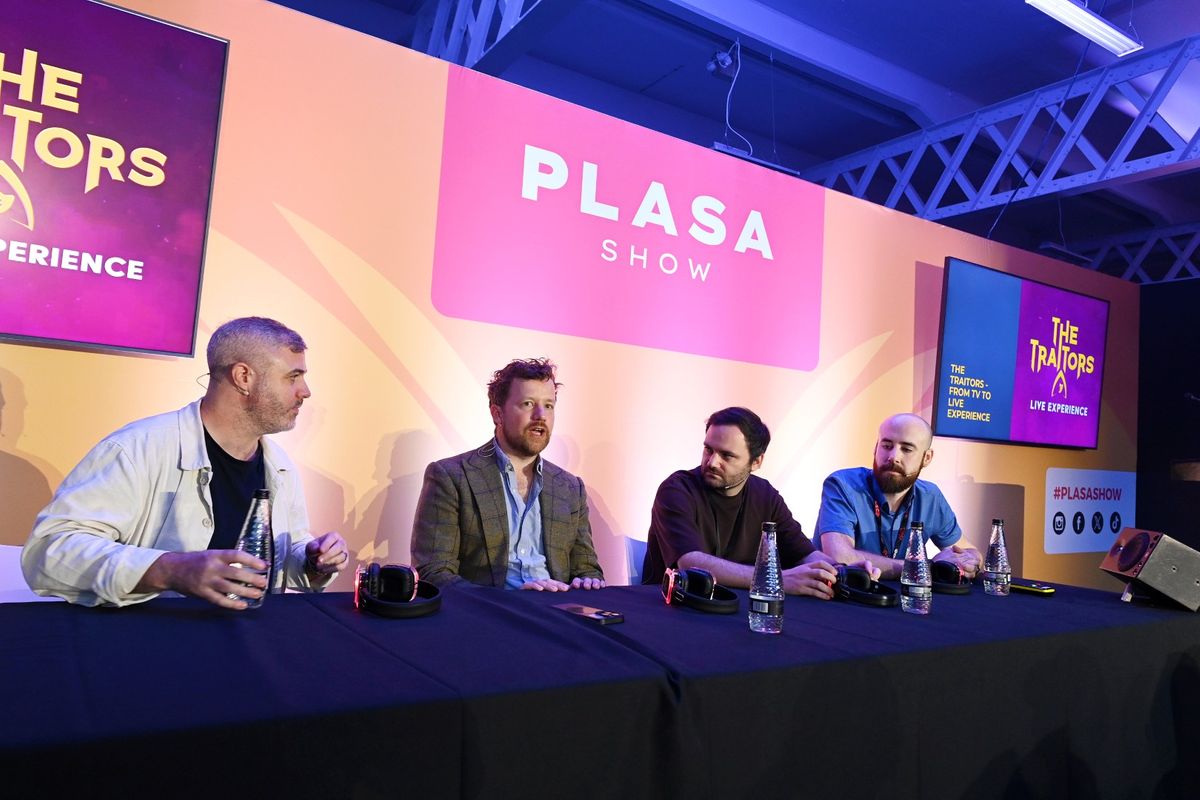
How do you turn a television game into a live experience where audience decisions can change what happens next? At PLASA Show 2026, the team behind The Traitors Live Experience revealed how lighting, sound and show control come together across eight simultaneous, performer-led games.
In London's Covent Garden, a four-storey building has been transformed into the world of The Traitors. Behind the tension, accusations and dramatic banishments is a complex technical system that must accommodate eight separate groups of players, each making decisions that influence the direction of their own experience.
Unlike a conventional theatrical production, where a predetermined sequence of cues takes performers and audiences through a story, The Traitors Live Experience requires its technology to respond to the decisions of the people playing the game.
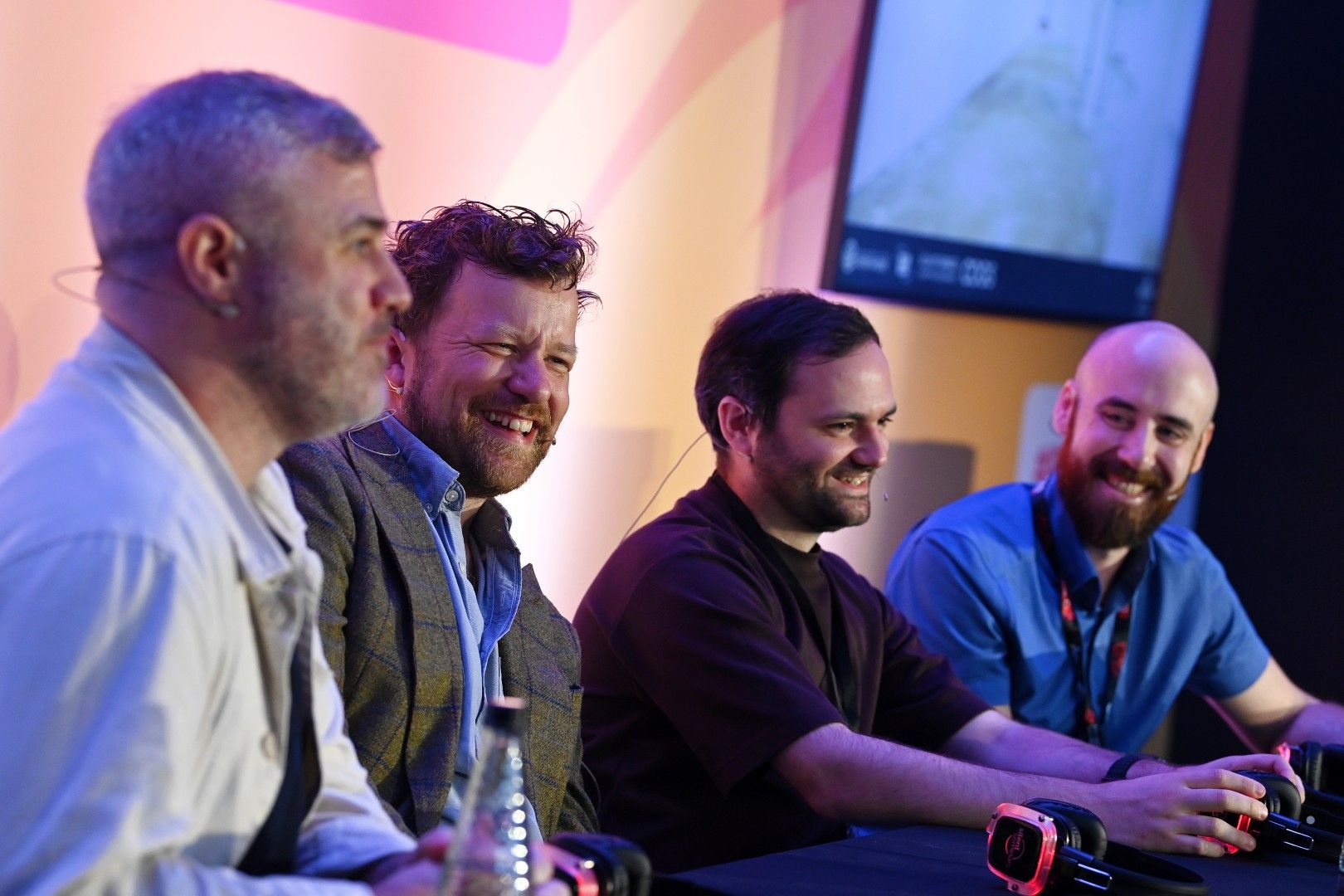
At PLASA Show 2026, creative director Neil Connolly of Immersive Everywhere was joined by lighting designer Elliot Griggs, sound designer David Gregory of Clay Productions Live and Sam Lee, technical solutions engineer at Clockwork Dog, to explore how this ambitious project came together.
Building The Experience
The project's scale presented an immediate challenge. Immersive Everywhere took on a building in Covent Garden comprising four floors, two of them underground, and undertook an extensive infrastructure conversion.
The work included installing a spiral staircase through three floors and running approximately 15km of cabling throughout the building. From taking on the lease in March 2025 to opening to paying audiences in July 2025, the team had just three and a half months to complete the build and installation.
Rather than attempting to recreate the Scottish castle familiar from television, the designers developed a distinctive underground setting with a mystery-inspired atmosphere.
The foundation of the experience, however, was always the game itself. The team needed to preserve its central rules while adapting them to a live environment where there would be no opportunity for retakes, editing or predetermined outcomes.
Taking Control
Central to the production is Clockwork Dog's COGS platform, which brings together show control and interactive game logic.
Each of the eight Round Table rooms accommodates up to 14 players and is hosted by an actor who effectively operates the show.
The hosts use iPads running a COGS-built interface, giving them information about the current game phase, player decisions and available actions. They can trigger lighting and sound cues, advance the game and override certain functions when required.
As Connolly explains, “The show runs on a stretchy band of time.”
Each group follows the same overall game structure but progresses independently. One Round Table discussion might conclude within minutes, while another could continue considerably longer, depending on the participants.
To accommodate this unpredictability, the team developed a custom interface incorporating what they call a 'drum pad' cue system, allowing the host to trigger technical responses at the appropriate moments.
Cue information is maintained in spreadsheets and imported into COGS, enabling updates to be introduced as the experience evolves.
For the central show-control team, the challenge becomes one of monitoring and supporting multiple experiences rather than calling every cue.
Lighting The Game
For lighting designer and programmer Elliot Griggs, the non-linear format presented an unusual challenge: how do you programme lighting for a production where the audience determines what happens next?
Each player's seat at the Round Table has an associated overhead light, with the lighting reflecting their progress and decisions throughout the game. With 14 participants in each room, the possible combinations quickly multiply.
During the PLASA Show discussion, Griggs highlighted the scale of the programming involved, estimating that the system could accommodate approximately 1.5 million possible lighting cues per room.
COGS communicates with an ETC Eos lighting control system, triggering the appropriate lighting responses as the game unfolds. Rather than having a lighting operator manually call each cue, the system responds to the decisions made by participants, allowing each Round Table to develop independently.
It's an approach that moves lighting beyond a conventional, predetermined sequence of theatrical cues, making it an integral part of the interactive gameplay.
“The show runs on a stretchy band of time.”
Sound As Storytelling
Sound designer David Gregory faced a related challenge: translating the distinctive musical identity of The Traitors into a live environment.
Where television allows music, dialogue and dramatic effects to be shaped in post-production, the live experience requires sound to react to conversations, voting sequences and changes in the game.
“On the TV, you've basically got someone in post-production mixing,” Gregory explains, highlighting a fundamental difference between creating sound for a broadcast and designing a live, interactive production.
Working with music from the television franchise, Gregory created an adaptable soundtrack that follows the narrative as it develops.
Musical loops and evolving sequences allow the soundscape to respond to different phases, building tension without dictating how long participants can spend in a particular moment.
At the heart of the audio infrastructure is a Yamaha DME7 processor, handling functions including loudspeaker processing and microphone mixing.
Through COGS, commands can be sent to the audio system to manage sound cues, transitions and microphone states as participants move through the experience.
The integration extends beyond the Round Table rooms. Participants who are banished move to the Lounge of the Dead, where live audio and camera feeds allow them to continue following the game they have left.
Interactive elements and further challenges ensure their experience continues rather than ending at the point of banishment.
A Different Kind Of Endgame
Perhaps the clearest illustration of the project's technical complexity comes during the endgame, when players must decide whether to end the game or continue voting.
Unlike a conventional cue sequence, the process can repeat several times, depending entirely on the decisions being made around the table.
As Lee explains, the team approached the challenge by “thinking of it as a game engine, not as a linear show.”
Each new decision can change the lighting, sound and progression of the game. Voting sequences, banishments and reveals must all be supported without knowing in advance how many times the process will repeat.
This required the team to move beyond its standard cue-list functionality and develop a looping system capable of responding to the different outcomes.
It is an approach that gives the host control over the dramatic progression, while the technology manages the complexity of the underlying game logic.
Beyond The Round Table
Designing the experience was only one part of the challenge. It also needed to work as a repeatable attraction, accommodating multiple sessions throughout the day.
With eight Round Table rooms operating independently, the team developed systems to monitor timing and coordinate the movement of groups through the building.
The hosts' interfaces include timing information to help them understand how their game is progressing against the wider operational schedule. The production team also adapted its audience allocation process after opening, allowing groups to be directed towards available rooms more flexibly.
Although eight Round Tables operate within the London venue, the underlying system was designed to be modular, with the potential to support different numbers of rooms in other configurations.
For the creative and technical teams, the achievement lies not simply in integrating lighting, sound and show control, but in making those systems work around the unpredictable decisions of the audience.
The Traitors Live Experience demonstrates how established entertainment technologies can be adapted to support a different approach to live storytelling, where performers and participants directly influence what happens next.
Watch The Full Seminar On Demand
Neil Connolly, Elliot Griggs, David Gregory and Sam Lee explored the production's creative development, technical integration and operational challenges in The Traitors – From TV To Live Experience at PLASA Show 2026.
The PLASA Show 2026 Education Programme was sponsored by Dante.
WATCH THE FULL SEMINAR ON DEMAND